Source photos
Flat lay, mannequin or ghost mannequin: which photo should you start from?
Start from the photo that shows your garment most clearly: a flat lay for prints, colour and simple shapes, a mannequin or dress form for structured pieces that need a body's shape, and a ghost-mannequin photo when you already have one or also need a clean garment-only image. Glammo AI takes all three, as well as hanging and on-model photos, and turns them into on-model images on fictional adult AI models.
Glammo AI6 min read
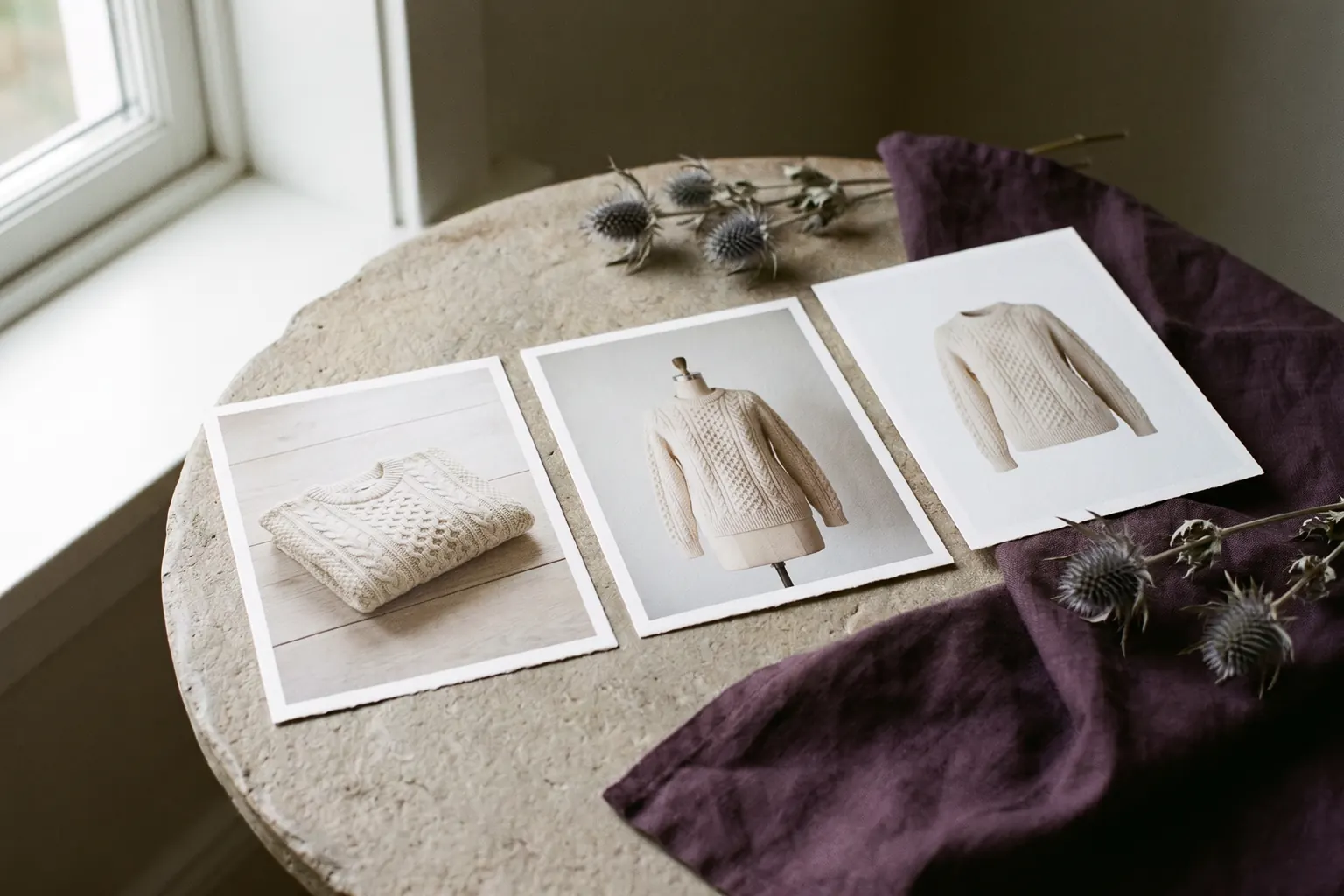
What is the difference between the three photos?
A flat lay is the garment laid flat on a surface and photographed from above. A hanging photo, taken on a hanger against a plain wall, shows much the same information.
A mannequin or dress-form photo shows the garment on a form, so you can see the shoulder line, the waist and how the fabric falls. The form itself stays in the picture. Each kind of photo records different evidence about the same garment, which is why the choice matters.
A ghost-mannequin photo starts the same way, then the form is removed in editing, often with a second photo of the inside of the neck added in. What's left is the garment's three-dimensional shape with nothing inside it, which is why it is also called an invisible-mannequin photo. The photos below are real source photos from Glammo's examples: a flat lay, a dress form and a shop mannequin. Flat lay, defined · Ghost mannequin, defined
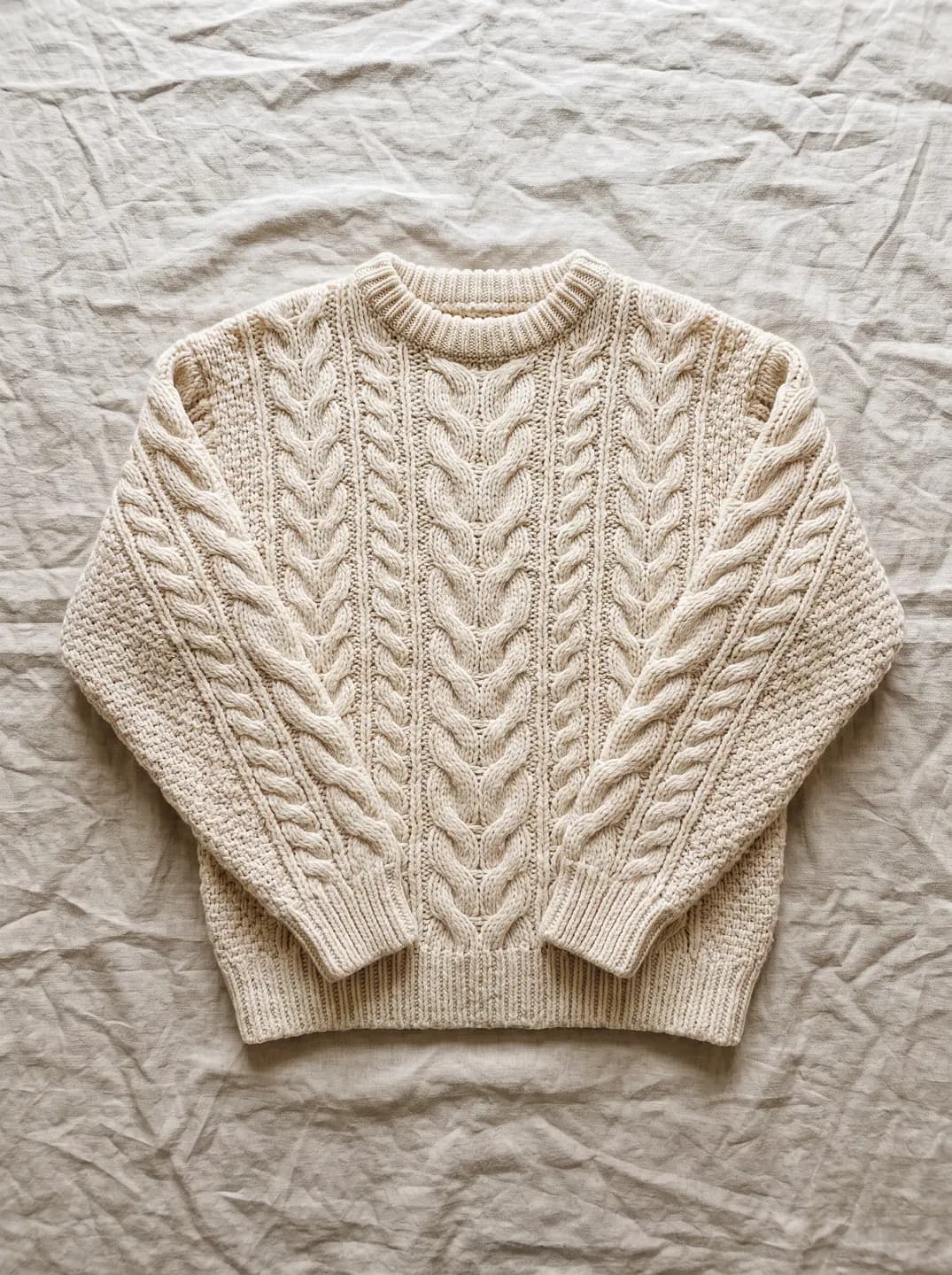
Flat lay
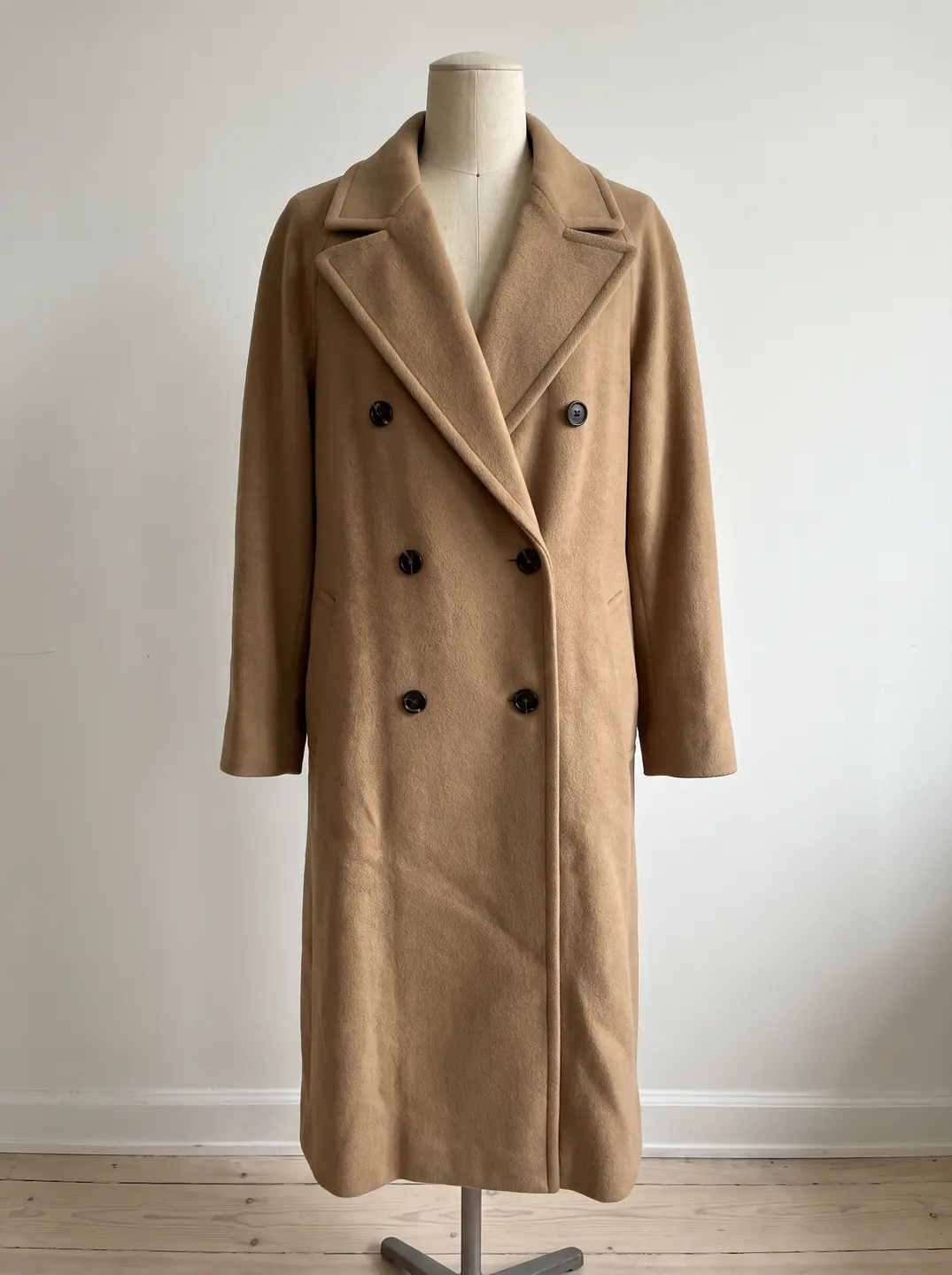
Dress form
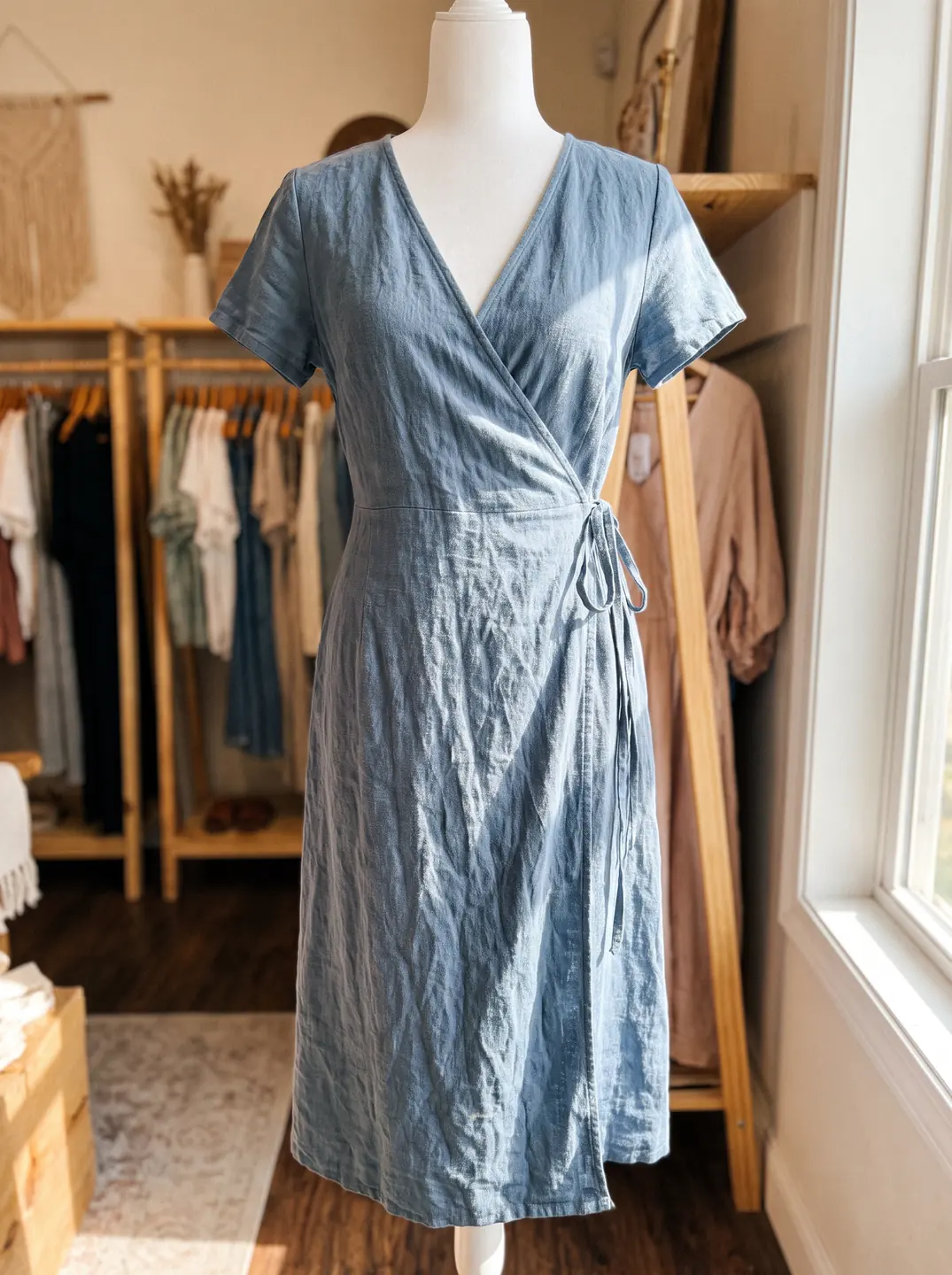
Shop mannequin
How do the three compare?
| Question | Flat lay | On a mannequin or dress form | Ghost mannequin |
|---|---|---|---|
| What it shows best | Colour, print, trims and the full outline | Shoulders, waist and how the fabric falls on a body | Shape and the inside of the neckline, with no form in view |
| What it suits | Tees, sweatshirts, hoodies, knitwear and printed pieces | Coats, blazers, fitted dresses and pleated skirts | Shirts, jackets and knitwear you also sell on white |
| What you need | A floor, daylight and a phone | A form close to the sample's size | A form plus editing time, or a supplier who provides the photos |
| What to watch for | Sleeves tucked under, knits stretched wide, a tilted phone | Pins and clips in view, a form that's the wrong size | Editing that clips the collar or smooths away texture |
| Effort per product | The lowest | Low once the form is set up | The highest, because of the editing |
When is a flat lay the best start?
A flat lay is the quickest photo to take and the easiest to get right. Everything a shopper inspects is on show at once: colour, print placement, neckline, cuffs, hem and trims. That makes it the natural choice for tees, sweatshirts, printed tops and most knitwear, and for print-on-demand sellers, whose mockups are flat lays already.
Its limit is the body. A flat lay doesn't show how fabric hangs on a person, so check the drape in every image against what you know of the garment. Lay knitwear without pulling it wider, and fold nothing under the hem.
Flat lays also repeat well. The same floor, light and phone height give every product in a range the same starting point, which makes the finished images easier to keep consistent.
When does a mannequin or dress form help?
Use a form when the garment's shape is the point: the shoulder of a tailored coat, a dress with a defined waist, a skirt whose pleats only open on a body. The form holds the garment much as a person would, so the photo records structure that a flat lay loses.
Pick a form close to the sample's size. A form that is too large stretches the fabric and pulls seams out of line, and one that is too small lets it sag. Pin only at the back, out of sight, and keep the camera level with the middle of the garment. Steam the garment once it is on the form, because creases show more on a body shape than on the floor.
Is a ghost-mannequin photo worth the extra work?
If your supplier already provides ghost-mannequin photos, use them: they combine a body's shape with a clean outline, usually on a plain background. Check that the editing hasn't cut into the collar or smoothed the fabric until its texture disappears. Ask for the unedited originals as well, so you can check any detail the editing may have hidden.
If you would be making them yourself, weigh the editing time against what you get. For on-model images, a well-lit mannequin photo already shows the garment's shape. For a clean garment-only image, a Glammo packshot on white, ivory or light grey, floating or laid flat, costs 1 credit.
What about hanging and on-model photos?
A hanging photo is just as quick: a slim hanger on a plain door, the garment straight, the camera level with its middle. It suits shirts, blouses and dresses that drape well, and it shows the same details as a flat lay with a little more sense of how the fabric falls.
If you already have the garment on a person, such as in a supplier's photo, start from that, provided you have permission to use it. Glammo is built not to reproduce the person in a source photo, so the new image shows one of Glammo's fictional adult AI models instead. Reshoot on-model photos
Which photo should you start from for each garment?
A starting point, not a rule. If you already have a clear photo of another type, start from that.
T-shirts, sweatshirts and hoodies
A flat lay, with the hood or collar arranged as it sits when worn.
Knitwear
A flat lay at the knit's natural width, plus a close-up of the stitch.
Shirts and blouses
A flat lay with every button done up, or a ghost-mannequin photo if you have one.
Dresses
A dress form for fitted and structured styles; a flat lay or hanger for loose ones.
Coats and tailoring
A dress form or ghost mannequin, so the shoulders and lapels keep their shape.
Trousers and skirts
A flat lay with the waistband straight; a form for pleats and full skirts.
Pieces you already have on a model
Use the on-model or supplier photo as it is, with permission. It already shows the garment on a body, so it is a starting point too.
One shoot can mix photo types
You don't need the same kind of photo for every product. A single Glammo shoot can include flat lays, mannequin photos and on-model photos, so use the clearest photo you have of each piece.
Mannequin photos to on-model imagesCommon questions
Is a flat lay or a mannequin photo better for AI model photos?
Neither is better for every garment. A flat lay shows colour, print and trims most clearly, and a mannequin or dress-form photo shows how a structured garment holds its shape. Start from the photo that shows the details a shopper needs to judge.
What is a ghost-mannequin photo?
A ghost-mannequin photo shows a garment photographed on a form, with the form removed in editing, so the garment keeps its three-dimensional shape with nothing inside. It is also known as an invisible-mannequin photo.
Can I use my supplier's ghost-mannequin photos in Glammo?
Yes, if the supplier allows you to use them. Glammo takes ghost-mannequin photos as a starting point for on-model images. Before uploading, check that the editing hasn't cut into the collar or smoothed away the texture.
What size of dress form should I use for product photos?
Use a dress form close to the size of the sample. A form that is too large stretches the garment and one that is too small lets it sag, and both change the shape the photo records.
Read next
Your next drop. Make it a moment.
Try Glammo free with 10 credits. No card required.