Product pages
How to show fit honestly with AI model photos
Show fit honestly by letting the product page's words do what the images can't: give garment measurements, a size chart and clear fit notes, and treat AI model photos as a picture of the style rather than proof of how a size fits. Glammo AI puts your garment on fictional adult AI models who never wore it, so the images don't measure fit and the fit information has to come from you.
Glammo AI7 min read
Why can't an AI model photo show fit?
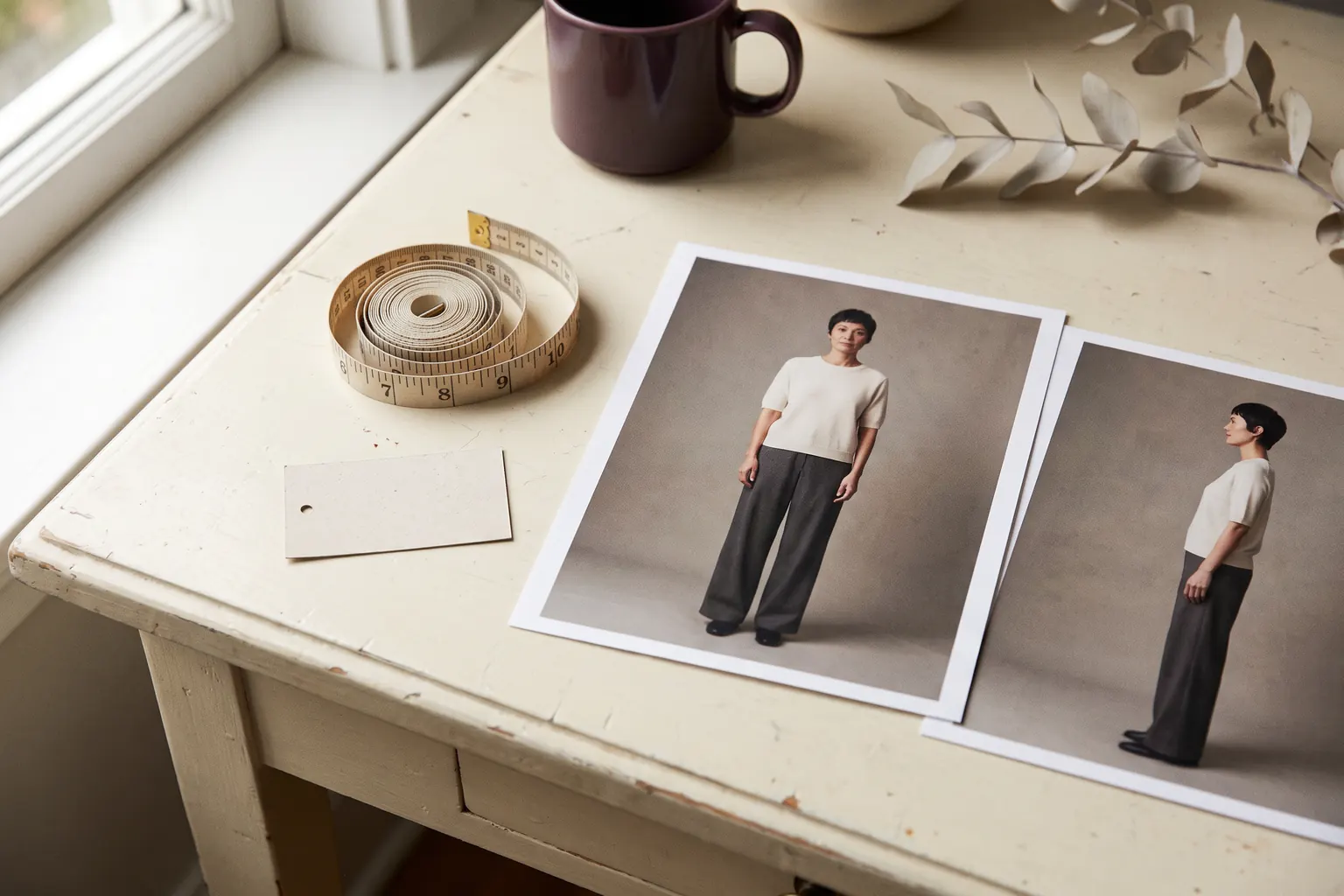
Fit is about a real body and a real piece of fabric: how much a waistband gives, where a hem lands, whether the shoulders sit right. In an AI model photo, nobody wore the garment. The person in the image is a fictional adult AI model, so the image shows how the style looks, not how a particular size behaves.
Glammo is built to keep each garment's colour, print and construction, but an image can't tell anyone how a size will fit. Treat the images as the answer to 'what does it look like?' and the words on the page as the answer to 'will it fit me?'
Which measurements should a product page give?
Measure the garment laid flat, without stretching it, and give the units.
Chest or bust
Across the garment from armpit to armpit. Say whether the figure is the flat width or doubled.
Waist and hip
For dresses, skirts and trousers, measured flat at the narrowest and widest points.
Length
From the highest point of the shoulder to the hem for tops and dresses, and from the waistband to the hem for skirts.
Sleeve
From the shoulder seam to the end of the cuff.
Inside leg, rise and leg opening
For trousers: the inner seam from crotch to hem, the rise from crotch to waistband and the width at the hem. Wide-leg styles need the opening most of all.
Stretch
None, a little or a lot, judged by handling the fabric yourself.
How you measured
Say that the garment was measured flat and in which units, and that measurements taken by hand can vary slightly.
What is the difference between a size chart and garment measurements?
A size chart lists the body measurements each size is designed for. Garment measurements describe the piece itself. For example, a size 12 sweater might be designed for a 94 cm bust and measure 112 cm around, because it is cut loose. Shoppers need both numbers, clearly labelled, to know whether that extra room is what they want.
Measure every size if you can. If you can't, measure the sample, say which size it is, and use your supplier's size-by-size measurements for the rest. Round the same way every time, and give centimetres and inches if you sell in more than one country. If you can only give one set of numbers, give the garment measurements, because they describe the piece the shopper will actually receive.
What should fit notes and model lines say?
| Avoid | Write instead |
|---|---|
| Model is 5'9" and wears a size S | Shown on a fictional adult AI model. Sample photographed: size S. |
| True to size | True to size, based on our own try-on of the sample |
| One size fits all | One size: 60 cm across the chest and 68 cm long, measured flat |
| See photos for fit | Photos show the style; see the measurements for fit |
| Flattering on everyone | Relaxed through the body, with a dropped shoulder |
Who should the fit notes come from?
Fit notes should come from a real try-on or from what customers tell you, never from the image. 'Runs small; size up for a relaxed fit' is useful only if someone found it to be true. If a member of your team tried the sample on and is happy to be described, give their height and the size they wore, labelled as a try-on and kept apart from the images.
When a style is new and there is no try-on and no review yet, say so plainly and point to the measurements. 'New style: see the measurements for fit' is more honest than a guess.
Where should fit information sit on the page?
Put the fit note in one line beside the size selector, where shoppers make the decision, and link from it to the full measurements. Some stores add a second short line there, such as 'Shown on a fictional model; see the measurements for fit', so shoppers don't read the image as a fitting.
Keep the size chart in text or an HTML table rather than as an image, so it can be read on a phone, by a screen reader and by search engines. If sizes differ between colours or fabrics, give separate figures rather than one chart for everything.
How do curve and petite models help?
Glammo's cast includes a curve model, Nell, and a petite model, Lily, who is 5'4". Use them to show a style on a figure closer to the customers of a curve or petite range, so the main image looks as if it belongs to that range. See the curve and petite models
They help shoppers picture the style; they don't change the rule. A curve or petite image still isn't a fitting, so give measurements for the extended and petite sizes themselves, including the inside leg on petite trousers. If you sell one style in regular and petite lengths, show each on the model that matches its range, with its own inside-leg figure.
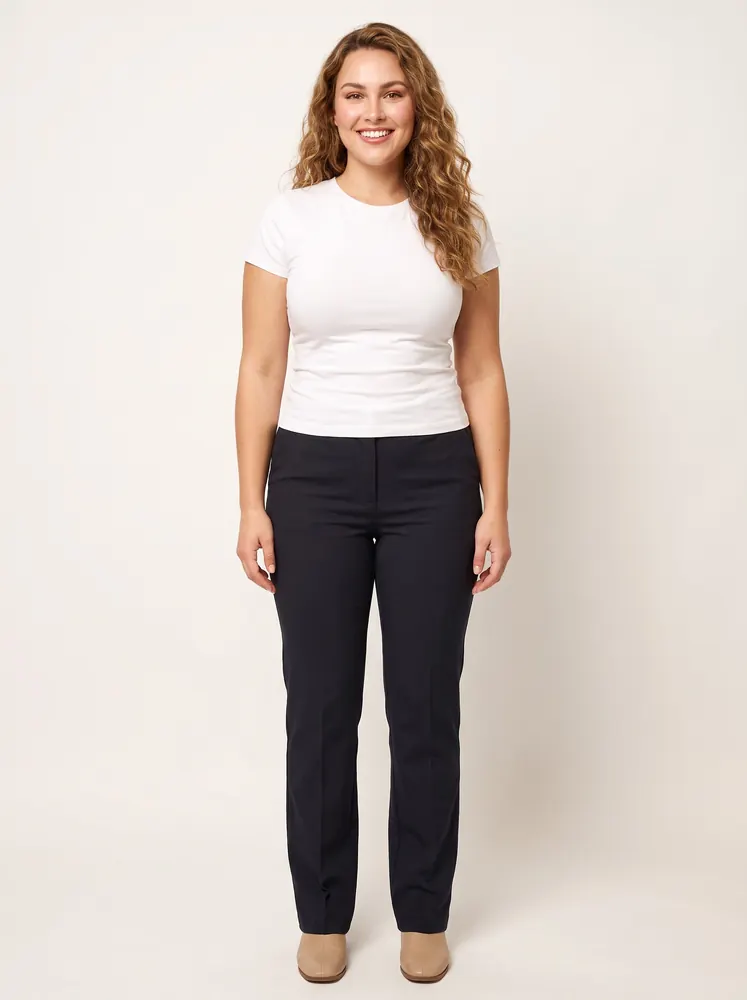
Nell, curve model
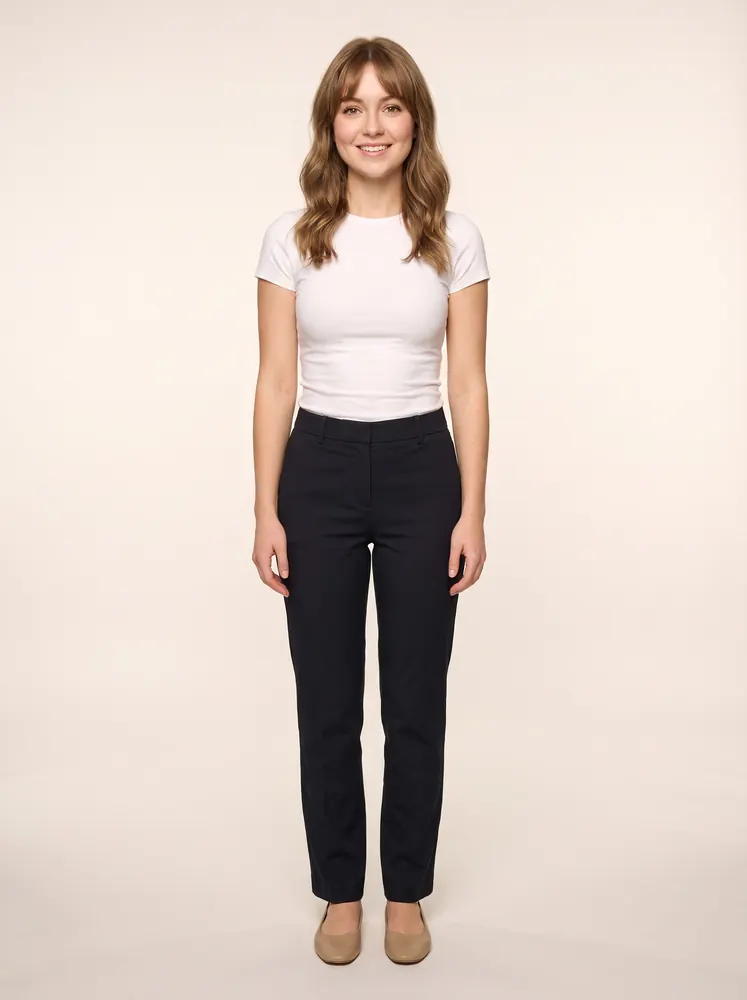
Lily, petite model, 5'4"
What review policy keeps fit honest?
Ask for the details that matter
Invite reviewers to give their usual size, the size they bought and how it fitted.
Publish the critical reviews
Show reviews that say a size ran small or large. Hiding them makes your fit notes harder to trust.
Answer fit questions in public
Reply where other shoppers can read it, and quote the measurement that answers the question.
Update the page when a pattern shows
If several reviews or returns say the same thing, change the fit note and say when you changed it.
Leave opinions about fit as written
Remove spam and abuse, but never edit what a review says about fit.
Read the returns too
When an item comes back for fit, record whether it was too small, too large, too long or too short, and read those notes alongside the reviews.
Common questions
Do AI model photos show how clothes fit?
No. An AI model photo shows the style of a garment on a fictional adult AI model, but nobody wore the garment, so the photo can't measure fit. Put garment measurements, a size chart and fit notes on the product page.
What should I write instead of 'model wears size S'?
Say that the photos show a fictional adult AI model and give the size of the sample you photographed, for example 'Shown on a fictional adult AI model. Sample photographed: size S.' If a real person tried the sample on, add their height and the size they wore as a separate try-on note.
Does Glammo have curve and petite models?
Yes. Glammo's 60 fictional adult AI models include a curve model, Nell, and a petite model, Lily, who is 5'4". They show a style on a different figure, but they don't measure fit, so give measurements for those sizes too.
How do I measure a garment for a product page?
Lay the garment flat and smooth it without stretching. Measure across the chest, waist and hip, then the length and sleeve, and for trousers the inside leg, rise and leg opening. Give the units and say the garment was measured flat.
Read next
Your next drop. Make it a moment.
Try Glammo free with 10 credits. No card required.